Cold Leg Audit: When Hosing Helps and When It Is Just a Habit
Cold-hosing has a strange status in British yards. It is often the first thing someone suggests when a leg looks a bit puffy, and the last thing anyone questions. Sometimes that is exactly right. Sometimes it is just a wet horse, a frozen tap and twenty minutes of nobody quite knowing why they are standing there.
This is not a substitute for your vet, and it is not a diagnosis. It is a practical audit of when cold therapy is useful, how to apply it sensibly, and how to cope when the yard tap has turned into an ice block.
What cold therapy is actually for
Cold therapy is used to reduce tissue temperature around an injury or area of inflammation. In simple terms, it can help limit swelling and provide some pain relief in the early stages of certain soft-tissue injuries, after some veterinary procedures, or when a vet has advised it for a specific problem. It is not a magic wand, and it does not tell you what is wrong with the leg.
The key point is that cold therapy is a management tool, not a diagnosis. If a leg is hot, swollen, painful or your horse is lame, the first job is to identify why. Call your vet if you are concerned, especially if the horse is non-weight-bearing, the swelling is severe or rapid, there is a wound, or the horse has a temperature.
When hosing earns its keep
Cold-hosing can be useful when your vet has recommended it for an acute injury, such as a strain or suspected soft-tissue damage, or after certain procedures where reducing swelling is part of the plan. It can also be helpful for some horses with filled legs after exercise, but only if you know the cause and your vet or physio is happy with the routine.
It is most useful in the early phase of an injury, when the goal is to calm things down. It is less useful as a general everyday ritual. Hosing a leg after every single ride because that is what the yard does is not a health plan; it is a habit. If the leg is normal, the horse is sound and there is no veterinary reason, you probably do not need to be out there with the hose.
When it is just water and folklore
Cold-hosing is not the right response to every lump or bump. An old, cool, hard swelling that has been there for months is not going to be fixed by twenty minutes of water. A muddy leg with a small scab does not need a hose session unless your vet has advised it. And a horse that is acutely lame needs a vet, not a longer hosepipe.
There is also a point where too much cold therapy is counterproductive. Leaving ice wraps on for hours, or hosing a leg until it is numb and the horse is shivering, is not better care. It is just more intense. Cold therapy should be controlled, timed and reviewed.
Time, temperature and technique
For cold-hosing, a common approach is around 15 to 20 minutes at a time, repeated as advised by your vet in the early stages. Use water that is cold but not freezing, and make sure the hose is running over the affected area rather than just splashing near it. Dry the leg afterwards, especially in winter, and check the skin for any signs of irritation.
Ice wraps and boots need care. Always follow the manufacturer's instructions, use a barrier between the ice pack and the skin, and do not leave them on indefinitely. Check the skin before and after. If the horse objects strongly, do not force it; rethink the method. A vet or qualified practitioner can advise on the right routine for your horse's specific injury.
UK winter practicalities
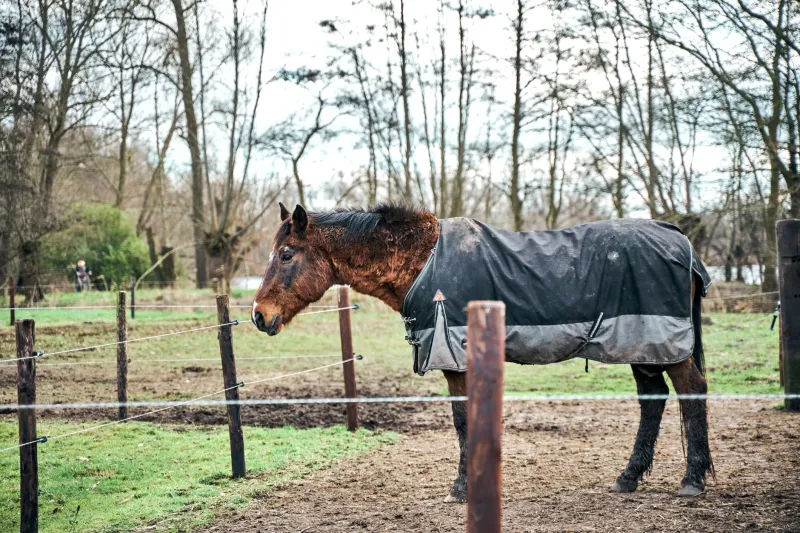
This is where the theory meets a frozen tap and a muddy gateway. In a cold snap, outdoor taps can freeze, pipes can seize and hoses can become stiff and useless. Plan ahead: fill buckets indoors, keep a spare hose inside, lag exposed pipes if you can, and know where the nearest working indoor tap is. A bucket and sponge can be a perfectly sensible back-up when the hose is out of action.
Muddy gateways are another challenge. Do not hose a muddy leg and then put the horse back into a wet field without drying it. Clean the area gently, dry with a towel, and keep the horse warm. If the yard is on clay, consider using a small indoor area or a clean bucket rather than standing in the mud for twenty minutes.
Ice wraps can be easier than hosing in freezing conditions, but they still need to be stored properly and checked regularly. Never apply them to a wet, muddy leg without cleaning first, and never leave a horse unattended with ice boots on if there is any risk of them slipping or panicking.
Helping the horse cooperate
Some horses stand like statues for cold-hosing. Others act as though the hose is a snake. Start with a calm routine, use a trusted handler, and keep the area safe. A haynet can help, but do not use food as a distraction if the horse is genuinely distressed. If you need a second person, use one. If your horse is dangerous to handle, speak to your vet about safer options rather than forcing the issue.
For horses that dislike hosing, a bucket and sponge or vet-approved ice wraps may be less stressful. The best method is the one you can apply safely and consistently, not the one that looks most impressive on the yard.
The bottom line
Cold therapy is useful when it has a purpose, a time limit and a review. It is not a substitute for veterinary advice, and it is not a daily ritual that every horse needs. If you are unsure why you are hosing, stop and ask. Your vet can tell you whether cold therapy is appropriate, how long to use it and when to switch to a different approach. Your job is to follow that plan, keep the leg clean and dry, and not let a frozen tap turn a sensible treatment into a winter wrestling match.