Six Small Things a School Horse Does When They'd Rather Have a Day Off
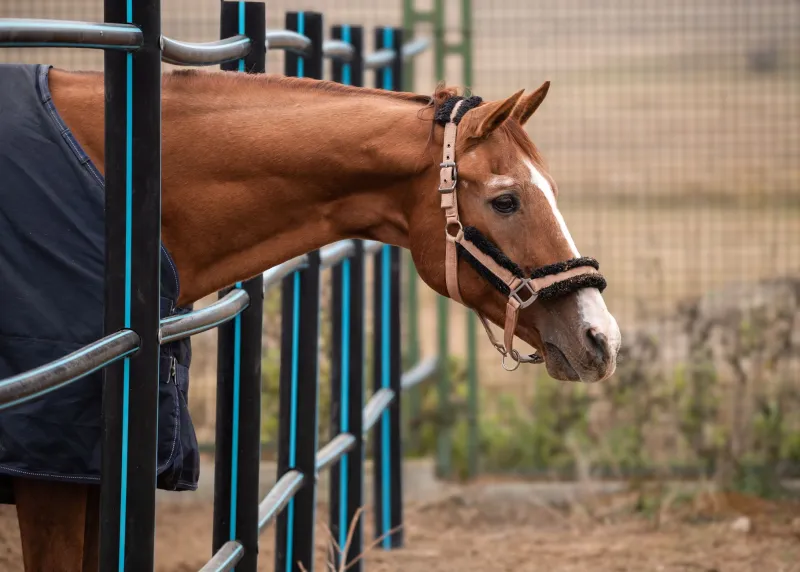
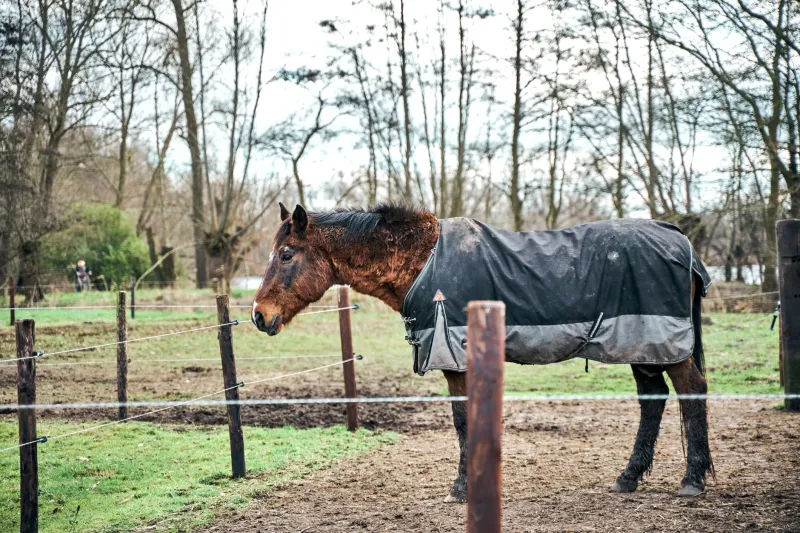
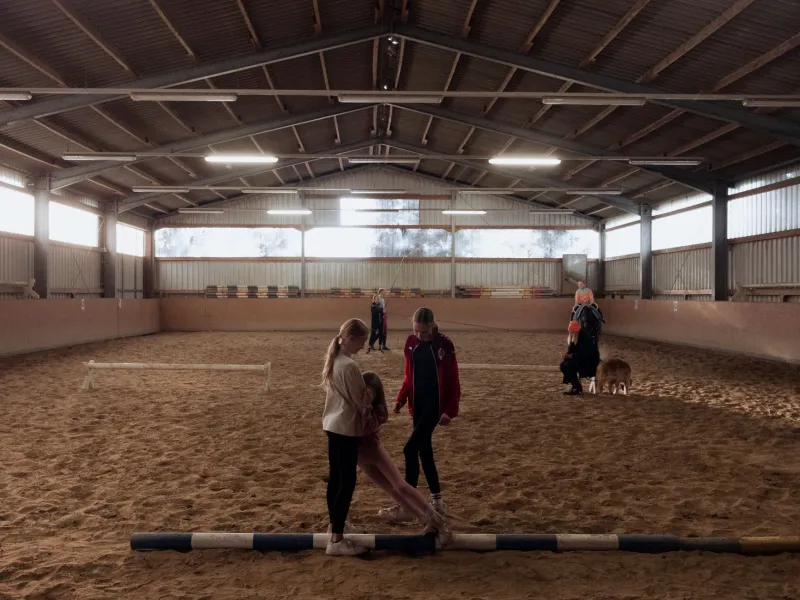
There's a particular kind of horse that ends up in a riding school. Patient, unflappable, willing to carry a wobbly novice round the school on a wet Tuesday without so much as a tail swish. We ask a lot of them, and most of the time they deliver.
Which is precisely the problem. A school horse who has learned to put up with things is also a school horse who won't make a scene when they've had enough. The big, obvious signs — bucking, refusing, bolting — are the last resort, not the first warning. The useful information usually arrives much earlier, and much more quietly.
Here are six of the smaller signals worth watching for, whether you ride once a week or help out on the yard.
1. They stop meeting you at the gate
Horses are creatures of habit and most school horses have a well-worn routine: head over the door when they hear the tack room open, a hopeful look at the feed bucket, a slow amble to the tie-up point.
When a horse who normally greets you starts standing at the back of the box, or turns away as the headcollar comes out, that's worth a second thought. It might be nothing more than a cold morning, but a consistent change in enthusiasm at the start of a session is one of the earliest things a yard will notice if anyone is paying attention.
2. The tail tells a quieter story
A tail swishing during a lesson is often put down to flies or attitude. In winter it's rarely flies.
What you're looking for is a change in pattern: a horse who swishes on the girth being done up, or on a specific transition, or every time a particular rider bounces into the saddle. Consistent rather than constant is the clue. If the tail swings at the same moment every week, that's not a mood — that's a message about a particular place on the body or a particular moment in the session.
3. They get a bit wooden in the hand
School horses develop a wonderful range of ways to carry a beginner safely, and one of them is a certain flatness in the contact. It's not a fault; it's a coping strategy.
But if a horse who normally softens and stretches starts feeling rigid, hollow or oddly reluctant to go forward on one rein, take note. It can be as simple as a saddle that's shifted, a bit that's not sitting right, or a stiff neck from a cold night out. It can also be the first hint of a low-grade soreness that's been building for a fortnight.
Either way — mention it. Instructors can't feel what you feel from the ground, and they rely on the rider's description more than most people realise.
4. A change at the mounting block
This is one of the most overlooked signals on any yard, and one of the most easily dismissed as naughty behaviour.
A horse who used to stand like a statue and now shifts away, swings their quarters, or paws while you get on might be anticipating discomfort — a saddle issue, a sore back, a tweaked stifle. They might also just have learned that fidgeting gets them out of work, so it needs a proper look rather than an assumption in either direction.
If you're a client, this is one to raise with the instructor before you get on, not after. Nobody minds being told; plenty of people mind finding out three weeks later.
5. Ear position drift
Ears are a blunt instrument for diagnosis and a decent one for trend-spotting. One ear back is listening. Both pinned is a warning. But the middle ground — ears that stay slightly back through a whole session, or a horse who stops flicking them towards the instructor's voice — is the bit people miss.
A school horse who has gone quiet in the ears, so to speak, is often a horse who has stopped expecting anything interesting to happen. That's not necessarily a welfare issue, but combined with any of the other signs here, it's worth flagging.
6. They're the first one caught and the last one chosen
This one is about the yard, not the rider. Walk down any block of school horses and you'll see a hierarchy of who gets used. Certain horses get picked for every group, every camp, every Pony Club rally, because they're the reliable ones.
Reliability has a limit. If the same three horses are working six days a week while a fourth stands in the box, that's a rota issue worth raising with the yard manager — politely, and once, rather than as an accusation.
How to raise it without causing a fuss
The key is to be specific and unemotional. "He felt really stiff on the right rein today and he swished his tail every time I asked for canter" is useful. "He seemed a bit off" is not, however true it feels.
A good instructor will want three pieces of information: what happened, when it happened in the session, and whether it's happened before. Write it in the yard book, mention it at untacking, or send a message that evening. Most schools keep a simple log, and patterns show up surprisingly fast when someone is writing things down.
What good yards do with it
None of these signs automatically means a horse needs a fortnight off. Sometimes a horse is just cold, or stiff, or bored, or having a slightly grumpy Wednesday.
The point is that they're worth saying out loud. The best riding schools treat rider observations as free diagnostics rather than as complaints, and a horse who gets a soft day, a physio visit or a saddle check because someone mentioned a swishy tail is a horse who stays in work for longer — and keeps carrying beginners round the school with the same good humour they started with.