Before You Sign: Ten Yard Contract Questions That Save You a Winter of Regret
Signing a livery contract is rarely the reason people fall out with a yard. The trouble usually starts later, when a question nobody asked in September turns into a disagreement in January. A good contract does not need to be suspicious or aggressive; it just needs to be clear. Treat it like a health check for the year ahead, especially with the 2026/27 winter on the doorstep.
Start with the day-to-day, not the small print
Most yard disputes are not about exotic legal points. They are about hay, turnout, arena lights, holiday cover and who was supposed to ring the farrier. So before you compare the monthly price, compare the daily reality. Ask for the contract by email, read it at home, and write down anything that sounds vague. A yard that is happy to answer questions now is usually a yard that will communicate better later.
The ten questions worth asking before you sign
-
What is actually included, and what costs extra? Check hay, bedding, feed, turnout, mucking out, arena use, trailer parking and holiday cover. If the answer is part livery, ask exactly which parts. A cheap headline rate can look very different once haylage and bedding are added.
-
What are the notice terms and deposit rules? Ask how much notice you must give, how much notice the yard must give, when the deposit is returned, and what can be deducted from it. Get the answer in writing. If the contract says one month, do not rely on a verbal promise of two weeks.
-
How does worming work? Find out whether the yard uses faecal egg counts, targeted worming or a set programme, and who pays for what. Shared grazing makes this a yard-wide issue, not a private one. Ask how records are kept and what happens if a horse arrives without a recent worming history.
-
What are the turnout rules? Ask about individual or group turnout, winter schedules, mud management, gate handling and what happens when fields are closed. If your horse needs restricted grazing or cannot be turned out with others, say so now. The contract should reflect the arrangement you have actually agreed.
-
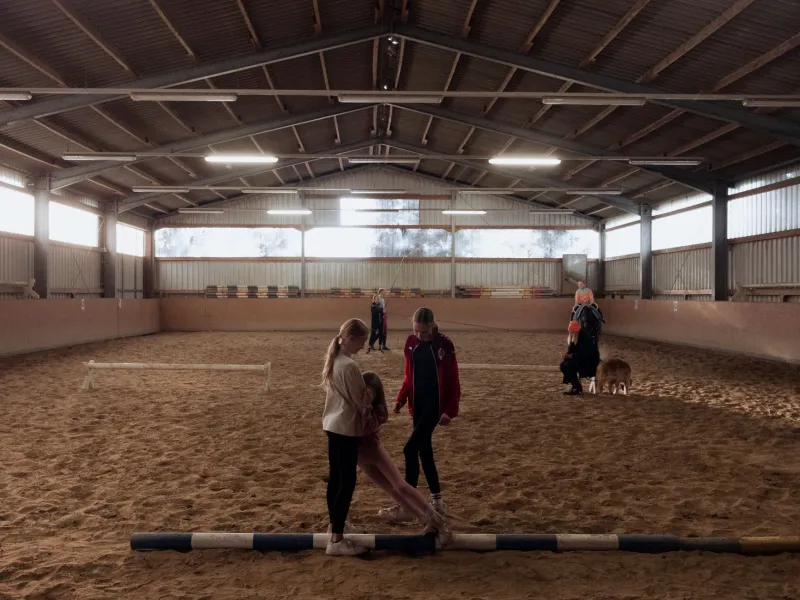
How are the arena and facilities managed? Ask about booking systems, lights, surface maintenance, use during frost, jumps, mirrors and any restrictions on instructors. A school that is booked solid every evening is not a problem if you know before you sign; it is a problem if you find out in week two.
-
What happens about holiday and sickness cover? Who covers your horse if you are away or ill? Is that included, charged separately, or arranged by you? Ask how much notice the yard needs and whether staff are insured to handle your horse. If you use a freelance groom, check whether the yard allows it.
-
Who can come onto the yard? Vets, farriers, physios, instructors, friends and family all need clear rules. Ask about visiting hours, parking, dogs, children and shared areas. This is not about being difficult; it is about knowing how the yard operates so you do not accidentally break a rule nobody told you about.
-
What is the emergency plan? Ask who to ring if your horse is colicking at 2am, whether staff live on site, and what the yard is authorised to do if you cannot be reached. Make sure your vet and emergency contact details are on file. A good yard will have a clear procedure, not a shrug.
-
How are problems handled? Ask who you speak to if something goes wrong, how complaints are recorded, and what happens if the issue is not resolved. You do not need a dramatic dispute process, but you do need a named person and a sensible route to follow.
-
What does leaving look like? Ask when you must remove bedding, feed and belongings, whether the yard can move your horse if you are late, and how the final bill is settled. Departures are easier when everyone knows the drill in advance.
Turn a friendly chat into a paper trail
None of this needs to feel confrontational. The best yard managers will welcome a rider who asks clear questions, because it saves everyone a headache later. Ask for any promised variation to be added to the contract and dated, whether that is extra hay, a different turnout arrangement or a agreed holiday cover plan. Keep a copy of the signed version and any emails that change the deal.
A livery contract is not just a price list. It is the working agreement for your horse's daily life. Spend half an hour on the questions now, and you are much less likely to spend a winter wondering what exactly you signed up for.