When the Gateway Turns to Gloop: A Yard Manager's Mud Plan for Winter 2026/27
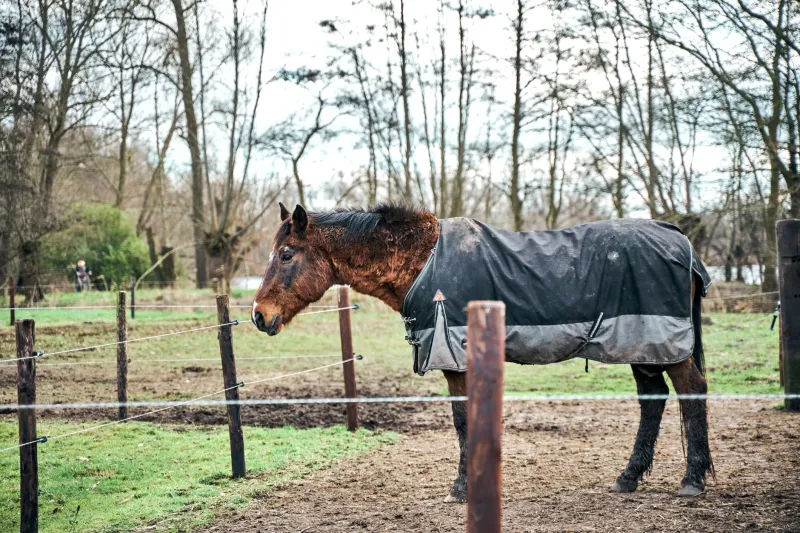
The gateway is the giveaway
Every yard has one: the strip between the field gate and the hardstanding that goes from grass to soup somewhere around Bonfire Night. By the time the clocks change it is ankle-deep, and by January it has crept three metres into the field. With rainfall running well above average across western and central England this autumn, plenty of managers are looking at ground that never properly dried out over the summer.
Mud fever — pastern dermatitis, to give it the clinical name — is the bill for that. It is not simply "too much mud". Prolonged wetting softens the skin around the heel and pastern, mud particles abrade the softened surface, and opportunist bacteria (Dermatophilus congolensis is the usual suspect, though others join in) move into the damaged tissue. The result is matted, scurfy, sometimes weeping skin, and a horse that would rather not have its hind legs handled, thank you very much.
The awkward part is that one horse can stand in slurry until March without a mark, while the thin-skinned sort with four white socks two boxes down comes down with it inside a fortnight. Skin quality, feathering, limb conformation and underlying conditions such as PPID all shift the risk. Any yard-wide plan therefore has to be a framework, not a single rule applied to thirty animals.
Fix the ground before you reach for the tub of cream
Ointments treat a problem. Ground management prevents one. Start by being ruthless about where the traffic actually goes:
- Gateway and track. Dig out, level and top up with woodchip, bark or hardcore before it becomes a trench. Re-do it in January; one application will not survive a wet winter.
- Sacrifice paddock. Fence off a smaller area deliberately and accept it will be ruined, rather than letting the whole field poach. Rotate the sacrifice patch if you have the space.
- All-weather turnout. Even a 15m x 15m bark or sand pen takes enormous pressure off the grass and gives you somewhere to put horses when the fields need a rest.
- Water and hay stations. Move them onto hardstanding. Horses congregate, and congregating is what destroys ground.
- Field size versus numbers. If your stocking density went up this year because of livery demand, be honest that the fields will not take it.
The 2026/27 week-by-week yard checklist
Late October – early November. Audit every gateway and water trough. Order woodchip. Photograph the fields so you can prove later how they deteriorate. Brief staff and clients on the winter routine before the first really wet week, not after it.
November. Get the sacrifice paddock fenced and the all-weather pen open. Confirm your clipper and towel supply for legs. Start routine leg checks at bring-in — this should take ten seconds per horse, not five minutes.
December. Re-top gateways. Expect the first cases after the first sustained wet spell. Review which horses are out 24/7 and which would do better on a shorter day turnout with a dry stable overnight.
January. The hardest month. Check for rain scald along the back and hindquarters as well as pasterns. Keep an eye on horses whose workload has dropped — unused legs swell.
February. Mud is at its worst and morale is at its lowest. Rotate staff on mucking out and bring-in so nobody gets stuck on the wettest job every day.
March. Begin planning recovery: harrowing, resting and reseeding the worst areas, and reviewing which fields need drainage work before next winter.
The ten-second leg check
Every horse, every bring-in. Run a hand down the back of each pastern, look for matted hair, and feel for heat or thickening. You are looking for:
- Scurfy patches or small scabs that come away with hair attached
- Matted, clumped hair over the heel that does not brush out
- Heat, or a lower leg that feels filled compared with the other side
- Discomfort when the leg is handled, or a hind leg snatched away
- Any lameness, or a limb that starts to swell upwards
Catching it at the scurfy stage is a few days of clipping and washing. Catching it at the weeping, swollen stage is a vet bill and a fortnight off work.
When it is time to ring the vet
Treat early, uncomplicated cases yourself: clip the hair away, wash with a chlorhexidine-based shampoo, dry thoroughly, and apply a suitable cream. But pick up the phone if you see swelling that climbs above the fetlock, heat that spreads up the leg, lameness that does not settle, cracked and bleeding heels, or no improvement after five to seven days of consistent treatment. Be quicker to call for horses with PPID, those with heavily feathered legs that hide the skin, and anything that has had repeated bouts. Pastern dermatitis that keeps coming back usually has an underlying driver — mites, photosensitisation, or a compromised immune system.
Holding the line when turnout gets cut
This is where yard managers lose goodwill. Clients on part livery have paid for turnout and will measure your winter by how many days their horse got out. The trick is to communicate the plan before it is needed, and to offer something rather than nothing.
Be transparent: publish your wet-weather policy in October, state the trigger conditions for restricted turnout, and explain the reasoning in welfare terms rather than insurance terms. Where you can, offer an alternative — a couple of hours in the all-weather pen, a hand-grazing slot in hand on the lane, or a longer turnout on the days the ground holds up. Movement matters for joints, digestion and respiratory health, so a horse stood in for a week because the gateway is wet is a welfare problem as much as an inconvenience.
Two messages you can copy into the yard group
Wet weather update — turnout policy in force from Monday. The lower field is holding water and the gateway is poaching badly, so for the next week horses will go out on the top paddock in two groups, roughly 9am to 1pm. Horses needing more movement can be booked into the all-weather pen (message the office). This is about protecting the ground now so we have grass in March — it is not a permanent change. We will review on Friday.
Mud fever season — a quick reminder. Please check your horse's pasterns when you ride or visit. Scurfy patches, matted hair and a bit of heat are the early signs, and they are much easier to sort now than in three weeks. Towels are in the tack room. If you spot anything you are not sure about, tell a member of staff and we will look with you.
The honest summary
Mud fever is boring, recurring and largely preventable, which is exactly why it deserves a plan rather than a shrug. Protect the ground, check the legs daily, treat early, and say what you are doing and why. Do that, and you will get to March with sound horses, intact fields and most of your clients still speaking to you.