Muddy Boots, Cold Hands, Front Row Seat: What Yards Forget About the People on the Rail
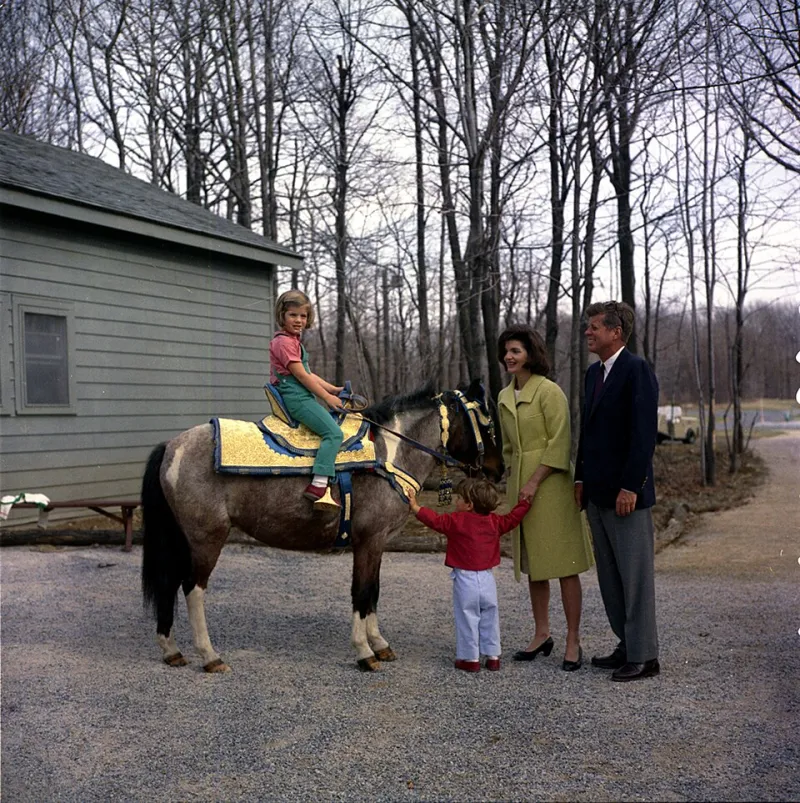
Photo: President (1961-1963 : Kennedy). Office of the Naval Aide to the President. 1961-1963, Public domain, via Wikimedia Commons
Every riding school has one: the grandparent who arrives forty minutes early, the partner who drives, the parent with a flask and a folding chair and absolutely nowhere to sit that is not ankle-deep. They are the bench brigade, and in a wet British winter they are having a genuinely poor time.
We bang on endlessly about rider experience. But for a huge number of families, the person paying the direct debit is standing outside in a coat, watching through a fence, wondering whether the lesson actually finishes at four or ten past. That is a client experience problem whether the yard likes it or not.
Start With the Mud
This is unglamorous and it is the first thing people notice. Nobody expects a yard to be a spa. They do expect not to lose a welly in the gateway.
A strip of matting from car park to viewing area costs less than a set of jump cups and does more for goodwill. So does a scraped path, done at the same time each morning, before the first spectator rather than after the fifth. If water pools in front of the bench every single year, that is a drainage job you are pretending is weather.
Also: a bench is not a viewing area. A bench without a windbreak, a roof, or a raised step for small children is a bench that gets used by nobody between November and March.
A Board Nobody Has to Ask About
Here is a small, cheap, wildly effective idea. A whiteboard, at the entrance, updated by whoever runs the lesson: lesson name, instructor, start and finish time, which arena, and what to bring.
Most spectator frustration is not about the riding. It is about uncertainty. Who is teaching my child? Did the lesson start late? Why are they in the outdoor school now? Which door do I use? A board answers all four before anyone has to interrupt a busy instructor mid-arena. Add a second line for cancellations, weather calls, and 'hacking group back at 15.15' and you have removed half the day's small frictions at a cost of about twelve quid.
The Tenner That Buys Goodwill
A kettle, a jar of instant, a tin of biscuits and an honesty box. That is the entire project. It does not need a barista. It does not need a licence. It needs a plug socket, a spare table and someone to wipe the counter once a day.
Yards that already do this will recognise the effect: parents linger, chat, book the next block, and offer to help at shows. Warm people are generous people. Cold people leave the moment the lesson ends and buy their hot chocolate at the garden centre on the way home, which is money walking off your yard.
If you have space for nothing else, a flask of hot water and a stack of plastic cups on a shelf in a porch is not beneath anyone. Some of the best yards in the country do exactly this.
Warmth Is a Safeguarding Issue Too
This is the argument that tends to move yard managers who are unmoved by hospitality.
If it is minus two, dark at half four, and there are eight children waiting in a car park with no warm supervision space, you have a child welfare situation rather than a comfort concern. Most yards are extremely careful about gates, ratios and who is allowed to collect. Far fewer have thought about the fact that their waiting area is a muddy track with a broken gate catch.
A heated, visible waiting room with sightlines to the yard, a working light and a loo keeps everybody's eyes in the right place. Add a queue code for adults on the yard during lessons, and be clear about which spectators are welcome on the arena side and which should stay behind the rail. Clarity is not unfriendly; vagueness is what causes someone to wander into the barn while a horse is being loaded.
Eyes on the Yard, Not Just the Horse
Parents watch everything. They see how the staff talk to the horses, whether a child is left holding a pony with nobody nearby, whether the tack looks cared for, and how quickly someone walks over when a rider is having a bad time. That is not nosiness; it is due diligence.
Which means the rail is a customer service position whether or not you staff it. Whoever is nearest the office needs to be the kind of person who says good morning, knows the timetable, and does not visibly sigh when asked a third time where the toilet is. If that is a struggle, put the answers on the board and the coffee on the shelf, and the pressure drops on everybody.
Ask Them
Most yards have never asked their spectators a single question. Which is strange, given they see more of the bench than anyone.
Once a winter, put three questions on a clipboard in the waiting area: what would make you warmer, what would make things clearer, and what nearly stopped you coming back? You will get an answer about the car park, an answer about the kettle, and one that stings about a member of staff. All three are worth knowing.
Small Things, Stacked
None of this is difficult. Drainage, a whiteboard, a bench with a wall behind it, a kettle, a light in the doorway, and a clear sign about where spectators stand. Stack those up and the family who came for one six-week block quietly rebooks for a term.
The people on the rail are not obstacles between the car park and the horses. They are the ones deciding where the money goes next, in a cold corner of a field, waiting for a child to finish trotting.