The Yard's First Lap: A Ten-Minute Fire Walk for Cold Mornings
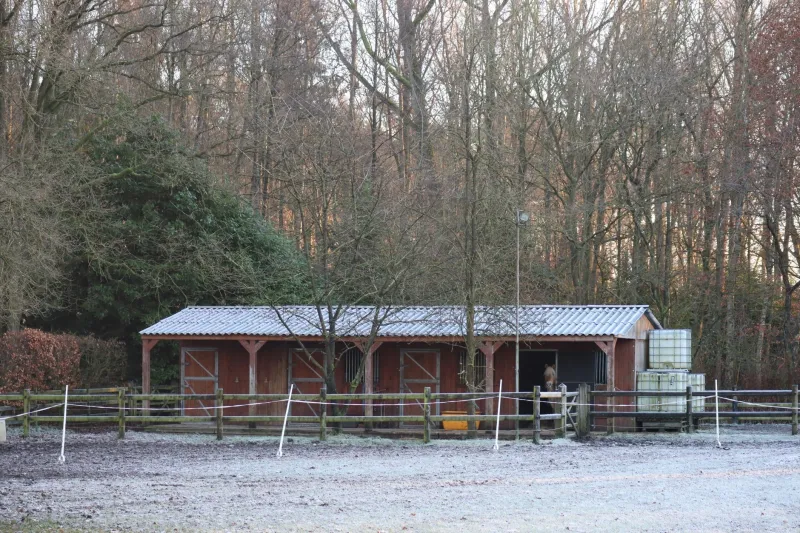
Winter mornings on a riding school yard have their own rhythm. Horses are fed, waters are checked, the first lesson list goes up on the board and someone puts the kettle on. But before the kettle, there is a better habit to build: a short, repeatable fire walk around the yard.
This is not about turning yard managers into firefighters or adding another folder to the office shelf. It is about treating fire prevention as a daily practical check rather than a once-a-year paperwork exercise. The fire risk assessment is the document. The fire walk is the habit that makes the document mean something.
Why the morning walk beats the annual panic
Fires on equestrian yards rarely start in dramatic circumstances. More often it is a build-up of small things: a lead trapped under a door, a heater too close to bedding, a padlock left on a gate because nobody thought about the escape route in the dark, or a pile of hay stored closer to the tack room than anyone intended.
A ten-minute walk at the start of the day catches those things while they are still small. It also fits naturally into the morning routine. You are already walking the yard. You are already looking at horses, taps, gates and fences. The fire walk simply gives that lap a sharper focus.
The route: same lap, same order
The key is consistency. Pick a route and walk it in the same order every morning. That way, anything out of place stands out. A route that changes every day is easy to half-do.
A sensible lap might start at the main entrance, move through the yard, check the hay and bedding store, pass the feed room and tack room, look at any heaters or charging points, then finish at the escape routes and the meeting point. It does not need to be complicated. It needs to be done.
Hay, straw and bedding: the fuel store
Hay and bedding are part of everyday life on a yard, which is exactly why they are easy to overlook. In the colder months, more bales tend to be stacked indoors and more bedding is moved around. The morning check should confirm that stored forage and bedding are kept well away from heat sources, electrical equipment and anything that could spark.
Look for obvious problems: bales stacked against a heater, loose straw near a socket, dust build-up around lights, or a store that has become a general dumping ground for batteries, paint and old machinery. If the store is also where staff stop for a chat and a cup of tea, make sure it is not also where someone leaves a phone charger or a portable heater.
This is also the moment to check that smoking rules are actually being followed. A no-smoking policy is only useful if everyone — staff, clients, visiting farriers and delivery drivers — knows where it applies and why.
Heaters, leads and the temptation of the extension reel
As the weather turns, heaters appear in tack rooms, offices and tea rooms. That is understandable. The problem comes when they are used without a second thought.
On the fire walk, check that any heater is clear of bedding, rugs, paper and clothing. Look at the plug and lead, not just the front of the heater. Is the cable damaged? Is it trailing across a walkway? Is it plugged into an extension lead that is already carrying too much? Are electrical items kept away from water and damp?
Leads are a particular winter risk. Rodents can damage cables in stores, doors can trap them, and extension reels can overheat if they are used while still coiled. The morning walk is a chance to spot the obvious and report it before someone uses it.
Escape routes: can you get out in the dark?
An escape route is only an escape route if it is usable when the yard is dark, busy and full of people who are not thinking clearly. That is why the morning check matters.
Walk the routes as if you were leaving in a hurry. Are gates and doors clear? Are they unlocked or easy to open from the inside? Is lighting working? Are fire action notices still in place and readable? Is the meeting point obvious to staff and visitors? Has a delivery pallet or a stack of shavings been left in the one gap people would need?
In winter, add the practical details. Frozen gates, wet floors, poor lighting and parked vehicles can all turn a good route into a bad one. If a gate needs a code or a key, everyone who might need to use it should know how it works. That includes weekend staff and anyone covering a shift.
People: who checks, who signs, who acts
A fire walk only works if it has an owner. The yard manager does not have to do it every single day, but someone does. Name the person on the morning rota, and name a backup for days off.
Keep the check simple. A tick sheet or a note on the yard phone is enough, as long as it records who walked the route, what they found and what was done about it. If a lead is damaged, it should be taken out of use, not just mentioned in passing. If a gate is blocked, it should be cleared there and then or reported to whoever can clear it.
The tone matters too. Staff should feel able to report a problem without being blamed for it. The point is to fix the risk, not to create a culture where people hide small issues until they become big ones.
The four-question finish
At the end of the lap, ask four plain questions. Is anything being stored where it should not be? Is anything electrical damaged, overloaded or too close to something that can burn? Can people get out quickly and safely? Does everyone know what to do if the alarm goes off?
If the answer to any of those is uncertain, deal with it before the yard gets busy. That might mean moving a pallet, isolating a lead, clearing a doorway or reminding a member of staff where the meeting point is.
Make it stick
A fire walk is not a substitute for proper fire safety arrangements, maintenance and training. It is the practical layer that keeps them honest. Ten minutes at the start of the day is a small price for a yard that is safer, calmer and better prepared.
So before the kettle goes on, take the first lap. Same route, same order, same questions. On a cold morning, it may be the most useful ten minutes of the day.