Dark by Four: How Yards Are Redrawing the Winter Lesson Board for 2026/27
Ask anyone who runs a riding school in Britain what the hardest month of the year is and you'll usually get the same answer: November. Not because of the cold, and not because of the mud — though both help. It's because the working day suddenly shrinks by a couple of hours and every lesson, turnout and muck-out has to be crammed into a window that closes while most people are still at their desks.
This year the clocks went back on 25 October, and by the first week of November sunset is landing somewhere around 4.20pm in the south of England. Head north and it's gloomier still. By mid-December, yards in Scotland are effectively finished outdoors before 3.45pm. The 3pm sunset might be a slight exaggeration for most of the country, but the sentiment is spot on: the afternoon has become the most contested patch of real estate on any yard.
Why the afternoon window keeps shrinking
There's a practical arithmetic to it. A lesson that finishes at 5pm in summer needs floodlights, an indoor school or a cancellation by Bonfire Night. Add in the twenty minutes of tacking up, the twenty minutes of untacking and the fact that most horses need a proper cool-down in cold weather, and a single group session quietly eats an hour and a half of staff time.
Then there's the ground. Frozen ground in the morning, wet ground by lunchtime, and a school surface that needs harrowing before it can take another twenty hooves. Many yards find that the arena is only genuinely usable for a compressed block between about 10am and 3pm, which is precisely when most clients are at work or at the school gate.
The school-run squeeze is real
Anyone who teaches juniors knows the pattern. The 4pm slot used to be the golden one — home from school, boots on, pony ready. Now it's dark, and parents are increasingly unwilling to have a nine-year-old riding under floodlights on a Tuesday in January.
Several yards we've spoken to have responded by pulling junior lessons forward into a 3.15pm slot and running them in shorter, sharper blocks of 30 to 40 minutes. Less time in the cold, less time standing around, and a much lower chance of a meltdown in the car park afterwards.
Flexible weekend blocks and the rise of the short midweek session
If weekday evenings are gone, the weekend has to work harder — but nobody wants to spend Saturday queuing for the arena.
The yards managing this best are doing three things:
- Splitting Saturday into bookable blocks rather than one long free-for-all, so a family can take a 9am private and a 10.30am group without the two clashing.
- Offering a shorter midweek option — a 30-minute lunge or flatwork session that fits into a lunch break or straight after the school run.
- Selling winter blocks rather than single lessons, typically six or eight weeks at a fixed time, so staff can plan the rota and clients get a guaranteed slot before it goes.
One Surrey-based school told us their winter block system cut no-shows by nearly a third, simply because people had paid upfront for a specific time and felt a bit more committed to it.
Sharing the arena without the gridlock
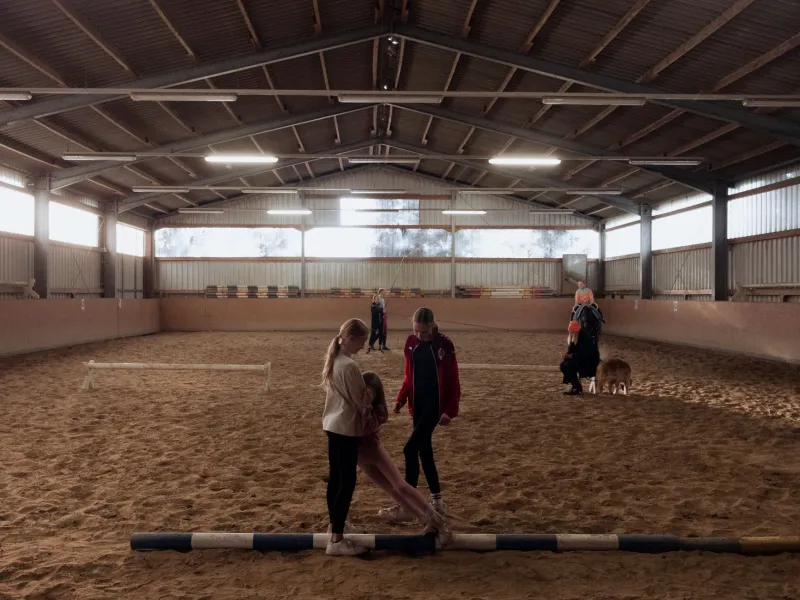
When the indoor school is the only dry space on the yard, it becomes the busiest room in the county. Sensible sharing is the difference between a smooth evening and a pile-up at the gate.
A few arrangements that work:
- Fixed slots with a five-minute changeover built in. Overrunning by ten minutes in a 45-minute slot is a slow-motion disaster for everyone downstream.
- Clear priorities for lungeing and beginner rides. A novice group and a lunge line in the same 20x40 is an accident waiting to happen.
- A visible board — whiteboard, WhatsApp broadcast or booking app — showing who has the school and when. Guessing is what causes friction.
It also helps to be honest about surface conditions. If the school is frozen solid at 8am, say so on the yard's social media rather than letting people drive forty minutes to find out.
Cancellation policies people can actually live with
Winter is where vague cancellation policies fall apart. Clients cancel because of ice on the lanes; yards cancel because the school has frozen or the instructor is ill. Both sides end up feeling hard done by.
What tends to work is a simple two-tier approach: a generous window for weather-related cancellations (48 hours, with a credit note rather than a refund) and a firmer one for everything else. Crucially, the policy needs to be written in plain English and sent out at the start of the winter term, not discovered in the small print after a lost lesson.
Tell clients about turnout before they ask
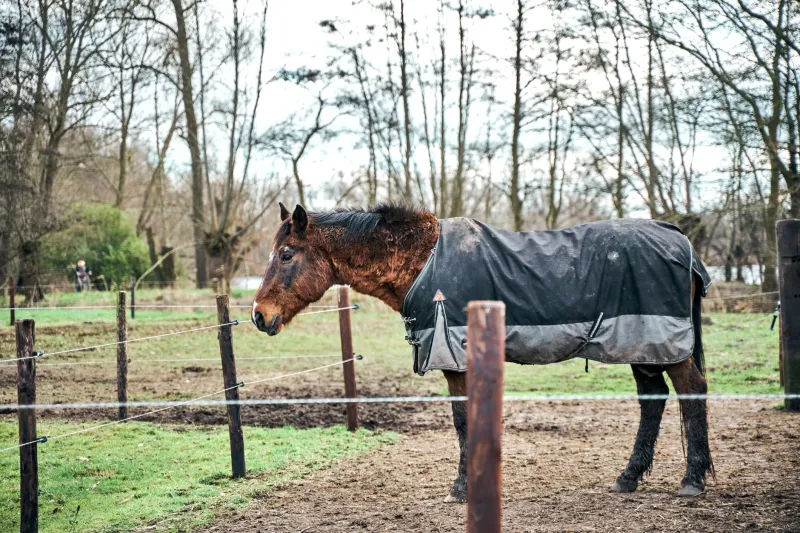
One overlooked piece of winter communication is turnout. Clients who arrive to find their horse standing in because the fields are too wet will assume the worst unless someone has explained the plan in advance.
A short note at the start of the season covering restricted grazing, individual turnout, mud fever checks and what happens on frozen mornings does more for client trust than almost anything else a yard can do. It also heads off the awkward conversation at the gate.
The upside of a shorter day
The winter timetable is never going to be anyone's favourite version of the yard. But there's something to be said for a season that forces everyone to be a bit more deliberate: fewer, better-planned sessions; clearer communication; and horses that get quality work rather than a lot of standing about in the cold.
If your yard hasn't yet published its winter board, now is the week to do it. And if you're a client wondering why the 5pm Tuesday lesson has vanished — it's not you. It's the sun.