Lights Out on the Yard: Rehearsing Your Blackout Plan Before Storm Season Bites
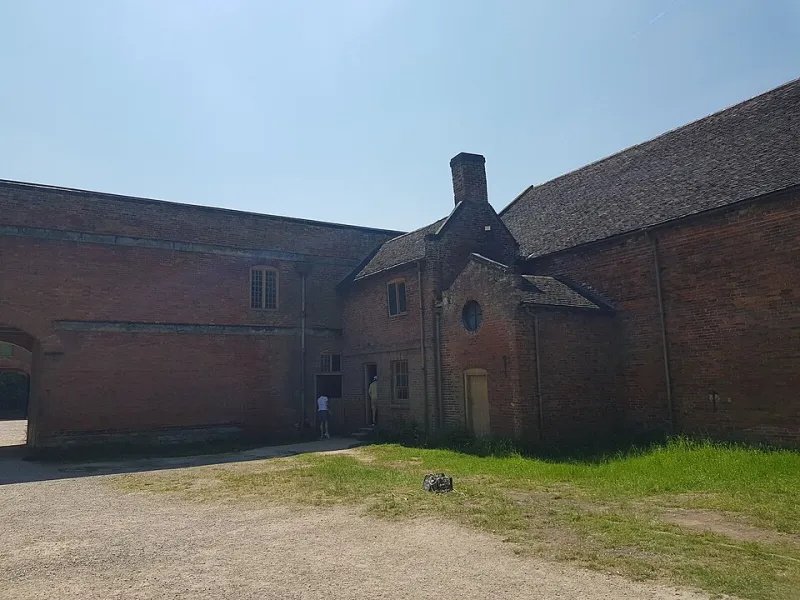
Photo: Jeff Gogarty , CC BY-SA 2.0, via Wikimedia Commons
Every January, somewhere in the UK, a riding school ends up filling troughs from a bucket in the dark while three instructors take turns holding a phone torch over a horse's foot. The power goes out, the plan turns out to be a group chat called 'Yard', and everyone discovers that the water comes from a pump.
The Met Office names storms from September through to February, and the windy season rarely misses. So write the protocol now, while the electric is on, and rehearse it once in daylight. Below is a skeleton you can edit into your own.
Know What Actually Stops
Before you plan anything, walk the yard with a clipboard and write down every single thing that depends on mains power. Most yards are surprised by how long the list gets.
- The mains water supply, if you are on a pump, borehole or booster set. No power, no tap water, and nobody remembers this at the time.
- Electric fencing for winter paddocks.
- Arena floodlights and yard lights, including the emergency cabinet you have never opened.
- Hay steamers and soaked-hay soak tanks with a timed element.
- The kettle, the office card machine, the broadband and the wifi the card machine needs.
- CCTV, electric gates, and the intercom callers will press when the power is out.
- Hot water, hose guns and the washdown area.
- Freezer and fridge for vet supplies and medications.
That list is your planning document. Anything on it needs either a backup, an alternative, or a written decision that you will simply do without.
Priority One: Water
Water outranks everything else. Horses will survive a dark night; they will not do well without drinking, and a freeze on top of a power cut can produce a very quiet crisis by day two.
Practical steps that actually work:
- Pre-fill as many clean containers as you have before a named storm arrives. Loft tanks, old dustbins, builders' buckets, a static water bowser if one lives nearby.
- Keep a written card in the office with the number of the local farmer or tanker firm who can deliver, plus the water company's emergency line.
- Know which troughs can be filled manually and which cannot.
- Do not let hay soaking eat your stored water on day one.
- If you use automatic drinkers, check them the moment power returns, before you do anything else.
Give one named person the water job. 'Someone will sort it' is not a protocol.
Lighting You Can Find in the Dark
Store torches where they are useful, not where they are tidy. A head torch by each stable block door, a big LED lantern in the office, spare batteries in a labelled tub, and a supply of glow sticks for clipping to gates, buckets and children's zips.
Walk the yard at dusk once with a torch and see what it looks like. Paths you know by day are not obvious at night, and a wheelbarrow left in the wrong place becomes a fall. If you have a generator for lighting, test it and test the cabling; if you do not, decide now which block gets the lantern and accept the rest is dark.
The Riding Decision
Write the rule down. Something like: if the arena lights fail before a lesson begins, the lesson moves to a lit area or is cancelled and credited. If they fail mid-lesson, riders dismount in an orderly way, horses are led back in pairs, and no one rides in an unlit arena for any reason, however experienced.
Staff need to hear that from you in advance, not to be improvising it while a child is on board in the dark. And the client-facing version of that rule should already exist in the winter cancellation policy, which most yards have and most riders have never read.
Generators: The Bit People Get Wrong
If you are running a petrol generator, three rules matter more than any other.
First, never run it indoors, in a barn, a tack room, a lorry, an open-fronted shed or anywhere the exhaust can drift. Carbon monoxide kills quietly and quickly, and 'the doors were open' is how people die. Second, it goes outside, well away from stables and windows, on level ground, under a cover that is not touching the hot parts. Third, only trained staff touch it. Fuel stored safely and separately. RCD protection on any lead. No daisy-chained extension reels, no running a generator in the dark with a phone torch in your teeth.
If your plan is 'we'll borrow Bob's generator', find out now whether Bob's generator can run a water pump, and whether Bob is even around at Christmas.
Telling Clients Before They Ring You
Half a blackout is a communication problem. Your card machine is down, your wifi is out and your phone is on four per cent.
Have a text or WhatsApp broadcast list ready with every current client on it, and a rechargeable power bank that lives in the office and is never borrowed. Keep a paper printout of phone numbers, because everything else is in the cloud. Draft two messages in advance, one for 'delayed opening' and one for 'lessons cancelled, credits applied', and leave them in the office folder so nobody is writing poetry under pressure.
Put one sentence on social media, once, early. Silence is what makes people ring the office line sixteen times on the morning you are trying to bucket-fill a trough.
Rehearse It Once, in Daylight
Fifteen minutes, in November, at the start of a staff meeting. Switch off the lights you can safely switch off, hand out torches, and ask three questions: who is the water lead, where is the lantern, and what do we say to tonight's clients. Watch what goes wrong. Somebody will not know where the stopcock is. Somebody else will find the power bank is missing.
Fix those two things and laminate the one-page protocol on the office wall. It should have the priority list, the phone numbers, the generator rules, the cancellation line, and who decides.
Storm season is not a surprise. It is in the calendar every year, arriving with a name. The only variable is whether your yard has already talked about it in the warm and the light.