The Long Rein Advantage: Why a Winter Lunge Slot Suits More Riders Than You Think
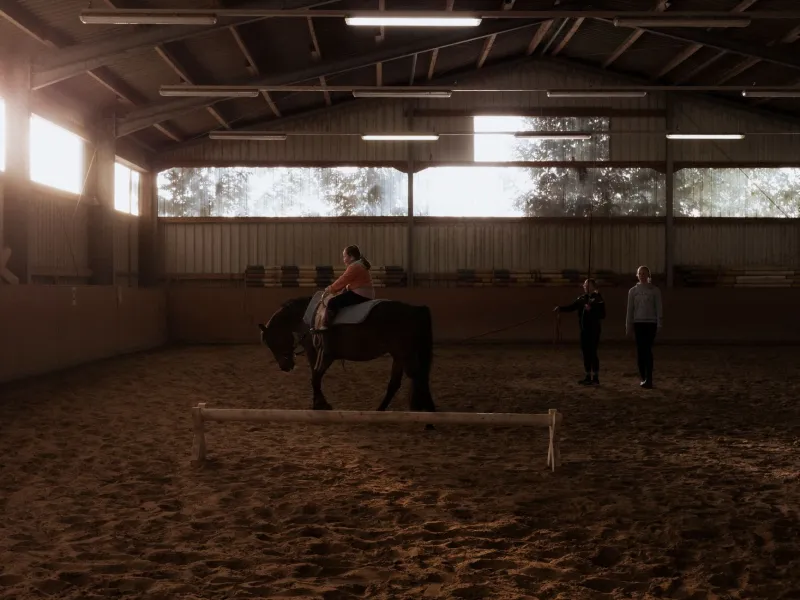
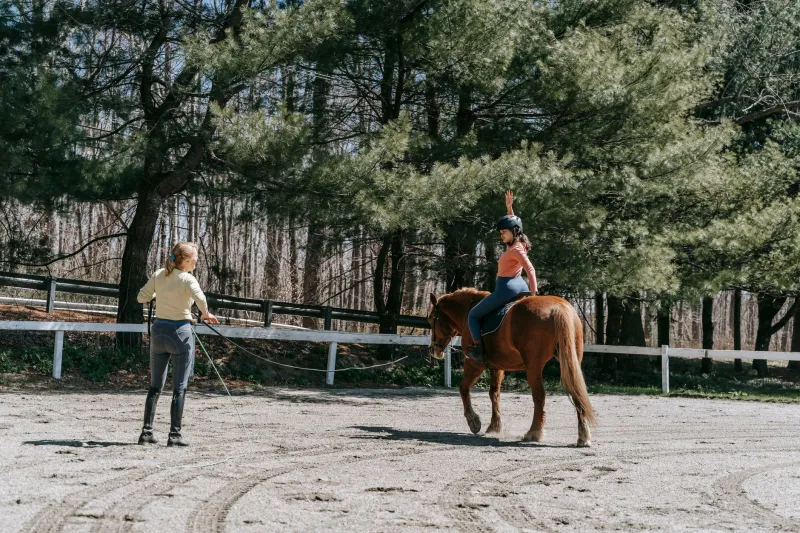
Lunge lessons have a reputation problem. Ask a lot of parents and they will tell you lunging is what happens before a child is allowed to steer. Ask a lot of adult riders and they will say it is where you go when your position has fallen apart. Neither is quite right, and both undersell what a good lunge session can do. With the clocks changed, the outdoor school carrying its first proper frost and the indoor arena booked solid by 5pm, winter is exactly the moment to give the lunge lesson a better slot on the timetable.
Why winter is the natural home for lunge work
Winter squeezes riding school capacity in a very specific way. Group lessons still want the same arena space, but daylight is shorter and the ground is less forgiving. A lunge lesson needs one horse, one rider and one instructor, which makes it easier to slot into gaps that a group cannot use. It also takes steering out of the equation, so a rider can work on rhythm, balance and confidence without being asked to manage a busy school at the same time.
That is not a beginner-only benefit. The adult returner who has lost their canter confidence, the teenager who tips forward over every fence, the rider coming back from a fall and the client who has just changed horses can all gain from a focused block on the lunge. Winter is a good time for this because competition pressure is lower. There is less hurry to be ready for a show and more room to say: let us spend four weeks on the quality of your seat.
The horse-and-rider pairing matters more than the booking sheet
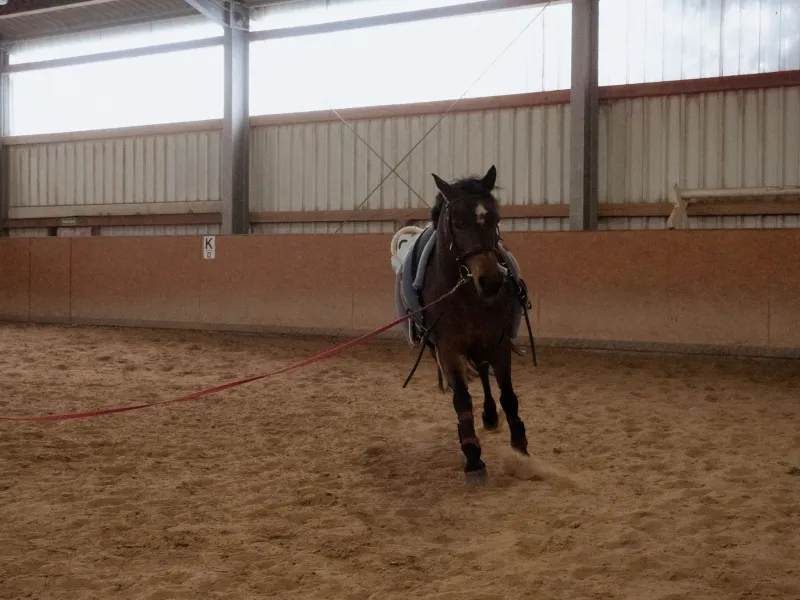
The best lunge horse is not necessarily the quietest horse in the yard. It is the one with a steady rhythm, a tolerant temperament and enough training to stay relaxed on a circle while the rider wobbles, straightens and tries again. A horse that leans on the line, rushes in trot or gets tense in the indoor school will make the lesson harder than it needs to be. So will a fresh young horse on a cold morning.
Pair by goal rather than by age or label. A nervous novice and a competent adult can both use the same schoolmaster, but they should not be given the same session. The novice needs walk, halt and rising trot with plenty of praise. The adult might need work without stirrups, transitions on a circle or help feeling a true canter. Keep the circle large, keep the work short and do not use the same saintly horse for every lunge slot of the week. School horses need variety too.
The five-minute check that protects the lesson
Before any client arrives, walk the arena. Check the surface is not frozen hard, deeply boggy or littered with escaped poles. Make sure the gate is closed, the lighting is adequate and there is enough clear space around the circle. If your yard uses side reins or a roller, check stitching, buckles and padding before the horse comes in. Side reins are not a default fitting; they should be used only by an instructor who knows why they are being used and how to adjust them.
The horse should be sound, groomed and warmed up appropriately. Boots or bandages may be sensible, but they should not be a substitute for sensible ground. The rider needs a hat that fits, gloves, safe footwear and whatever body protector policy your yard applies. Agree the mounting routine, the emergency dismount and the words you will use if the rider wants to stop. Stirrups may be crossed only when the instructor decides it is appropriate, not because it looks good in a photograph.
Scheduling tips that do not squeeze the yard
Thirty-minute lunge slots are usually enough. They are intense for the rider and they ask a lot of the horse, so an hour-long marathon is rarely kind to either. Use the gaps left by cancelled group lessons, offer a weekday morning block for adults and keep after-school slots short and predictable. A lunge clinic once a month can work well in winter, especially if clients can book two or three sessions in advance.
Advertise it as a focus session rather than a remedial lesson. Put it on the booking system with a clear description: one rider, one instructor, work on balance and confidence. If your yard has a waiting list for group lessons, a lunge slot can be a useful bridge without adding another horse to the busy evening rotation. Just be honest about capacity. A tired school horse should not be lunged simply because the arena has a free half-hour.
How to explain the value to parents and adult clients
With parents, avoid framing lunging as a demotion. Explain that steering and balance are separate skills, and that taking steering away for half an hour can help a child feel a rhythm they have been chasing for months. Progress might show up as a quieter rising trot, a braver canter transition or a rider who no longer grabs the reins when the horse speeds up. That is real progress, even if it does not look like a lap of the school.
With adults, be equally direct. A lunge lesson is not starting over. It is a pit stop. Many adult riders spend years working around a position issue because they are too busy steering to feel it. A short winter block on the lunge can be the least glamorous and most useful thing they do all season. It is also easier to fit into a cold, dark weekday than a full group lesson, and the instructor’s attention is entirely on one person.
A final word on welfare
Lunge work is still work. Keep circles large, keep sessions short and mix lunge days with ridden days and rest days. Watch for stiffness, sourness or a horse that starts to lean or rush. The best lunge lesson is not the longest one. It is the one where the horse comes out of the arena calm, the rider comes out clearer and the instructor has a plan for the next session.
Winter will always test a riding school’s timetable. But a well-run lunge slot can turn a squeezed afternoon into a genuinely useful lesson — and give riders a skill that stays with them long after the frost has gone.