Mittens, Layers and a Calm First Trot: A Parent's Winter Yard Checklist
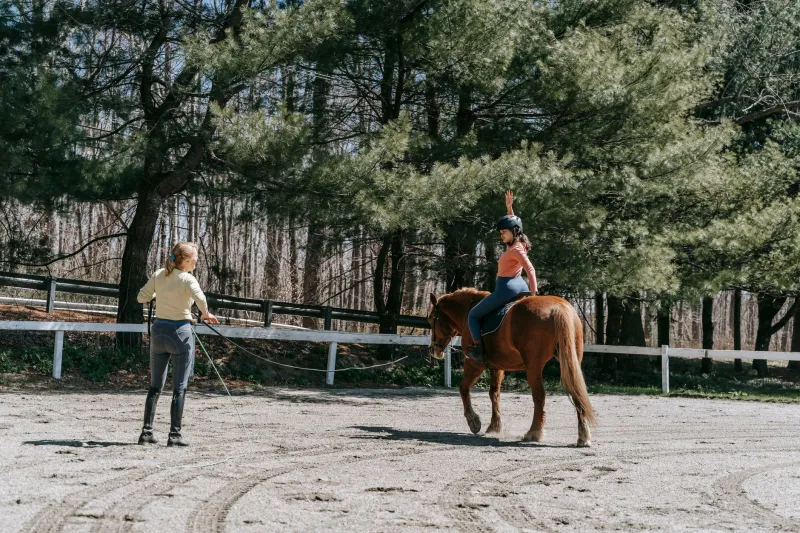
Frost on the windscreen, dark by four, and a child who has been talking about riding since August. The first cold lesson of the 2026/27 winter season is a big deal for families, and it is easy to overpack the car with nerves as well as spare socks. The good news is that a little preparation goes a long way. Most riding schools have seen hundreds of first winter lessons, and the children who settle quickest are rarely the ones with the most expensive kit. They are the ones who arrive warm, comfortable and clear on what is happening next.
Start with a conversation, not a kit list
Before you book that first November or December session, ring or email the yard with a few practical questions. Ask whether they provide hats and body protectors, and whether your child needs their own gloves. Check what the yard recommends for footwear, especially if your child does not yet have riding boots. Ask where the lesson takes place if the weather turns, whether there is an indoor school, and what the cancellation policy looks like for frost or high winds.
It is also worth asking how the yard handles a child who gets cold mid-lesson. A good answer will mention stopping, warming up and never pushing a shivering rider back on. Ask about pick-up timing too, and whether parents are expected to stay on site. Finally, confirm what happens after the lesson. Some yards encourage children to help untack and rug up; others send them straight back to the car. Knowing this in advance saves a soggy, confused scramble at the gate.
Dress for the yard, not the sofa
Layers are your friend, but not all layers are equal. Start with a thin wicking base layer rather than cotton, which holds sweat and turns cold quickly. Add a fleece or lightweight jumper, then a waterproof outer jacket that can be removed if your child gets too warm. Thermal leggings under riding tights work well, and two pairs of thin socks are usually better than one thick pair that bunches inside a boot.
Gloves need to be warm but not so bulky that small hands cannot hold the reins. Look for a snug fit with a grippy palm. A hat and a spare fleece in the car are sensible for before and after the lesson. Avoid long scarves or anything dangling that could catch on tack. Tie long hair back, and pop a spare pair of socks in the bag. It sounds fussy, but wet socks are one of the quickest ways to turn a happy rider into a miserable one.
The arrive-early advantage
Aim to arrive about fifteen minutes before the lesson. That gives your child time to settle, meet the pony, and walk around the yard without feeling rushed. It also means gloves can be adjusted, hats checked and nerves calmed. Rushing in at the last minute is hard on children and instructors alike, especially on a cold morning when everything takes longer.
Use the time to watch the previous lesson for a minute or two. It helps your child see what the routine looks like and gives you a sense of how the instructor speaks to the group. If your child is very young or very nervous, ask whether you can stand somewhere visible but out of the way.
What a good winter warm-up looks like
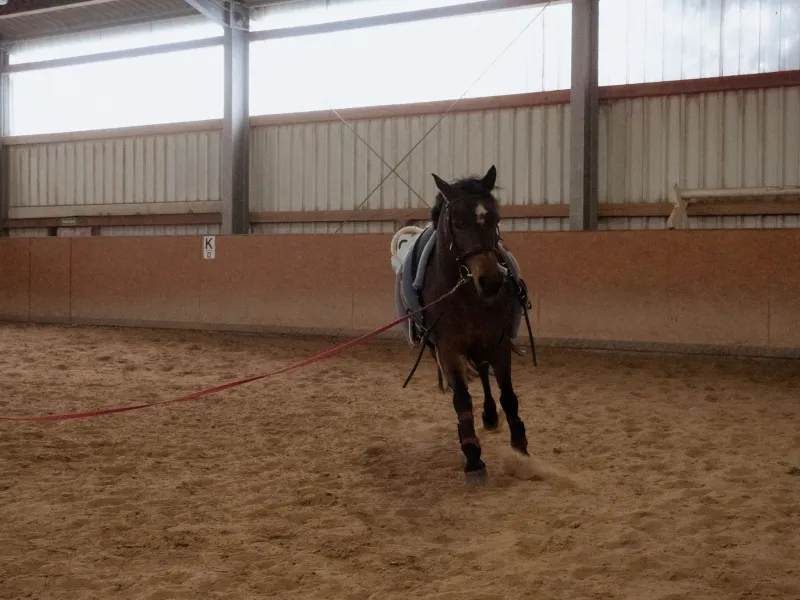
A winter warm-up should not be a quick trot to get the blood moving. It should be a proper ten to fifteen minutes of walking, gentle transitions and loosening exercises. Ask the instructor whether they build in extra walking on cold days. Horses need longer to warm up in low temperatures, and children do too. If your child comes back from a lesson saying they spent ages just walking, that is not a wasted lesson. That is a sensible winter lesson.
Spotting a child who is too cold to ride well
Children often do not say they are cold until they are really cold. Watch for hunched shoulders, fidgeting hands, a quiet voice or a sudden lack of interest in the pony. Shivering, pale skin, numb fingers or tears are clear signals. If you see any of these, tell the instructor. It is far better to end the lesson early than to let a child tough it out and come away with a bad memory. A warm car, a spare fleece and a biscuit can rescue the day.
The pick-up plan
Confirm the finish time and where you should be waiting. A child who has been riding in a cold school will cool down quickly once they stop moving, so have a dry fleece and a hat ready. If the yard runs a post-lesson routine, ask whether you can watch or help. It is often the part children love most, and it helps them feel part of yard life rather than a drop-in visitor.
Confidence comes from comfort
The first cold lesson is not really about perfect position or a tidy trot. It is about your child learning that winter riding is manageable, friendly and worth the extra layers. Ask the questions, pack the spare socks, arrive in good time and trust the instructor to call it if the cold bites. With a calm start, the first frosty morning can become the story they tell all winter.