Nerves, Numbers and the Centre Line: A First-Timer's Winter Dressage Plan
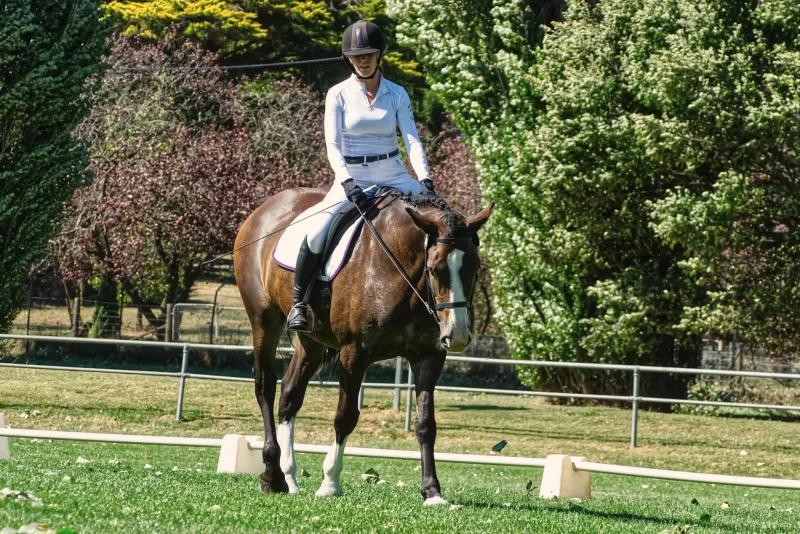
Indoor dressage in winter is supposed to be fun. It can also feel like a test of your ability to remember a test, plait a mane and find a parking space in the dark. If you're entering your first riding-school-hosted show this season, here's a plan that keeps the day small and manageable.
Find the right show
Start with your own yard. Many riding schools run unaffiliated dressage through the winter, often on Sunday mornings or weekday evenings under lights. Ask your instructor which competitions they'd recommend for a first-timer. Local equestrian centres, British Riding Club branches and Pony Club events are also options, but check the atmosphere. A busy championship venue is not the same as a quiet school show with a café and a warm viewing gallery.
Look for schedules that offer Intro or walk-trot classes, and check whether they allow assistants or callers. If you're on a school horse, ask whether the yard will transport, hire out the horse, or enter you as part of a team. Some schools run in-house leagues specifically for clients who haven't competed before. That's gold.
Choose a test you can ride accurately
The temptation is to enter the class your friends are doing. Resist. Choose a test where the movements are within your current balance, not your aspirational balance. If you can't ride a confident 20-metre circle in canter, don't debut at Prelim just because the schedule looks friendly.
For most first-timers, an Intro test (walk and trot) or an easy Prelim is plenty. Read the test sheet properly. Note the arena size, the required transitions and whether you need to show a free walk on a long rein. Practise the test in sections, then run it start to finish. If you can, have someone read it aloud while you ride so you get used to a voice outside your own head.
Decode the dress code before the day
Unaffiliated dressage is usually smart but not scary. A tweed jacket, shirt and tie, light or dark jodhpurs, riding boots and gloves will get you through most schedules. Check the schedule for anything specific — some venues ask for a stock tie, some don't mind a plain base layer. Hair should be neat and tied back; a hairnet is cheap insurance. No dangling jewellery.
Plaiting is optional at most unaffiliated shows. If your horse has a mane like a hedge and you're short on time, a clean, tidy horse is better than a half-plaited one. Clean tack matters more than a perfect quarter mark.
Your turnout checklist
- Test sheet, printed and in a plastic wallet
- Times and venue address, plus parking instructions
- Bridle number or competitor number, if required
- Clean saddle, bridle and numnah
- Horse groomed, mane tidy, hooves picked out
- Boots and bandages checked against the schedule — some classes don't allow them
- Your own: jacket, shirt, tie, gloves, hairnet, boots, spare hair ties
- Water, haynet, bucket and a rug for the horse
- Snacks and a hot drink for you
- A friend or family member to hold a coat and take photos
Warm-up without the panic
Arrive with more time than you think you need. Indoor warm-ups can be busy, and the first ten minutes are usually the most chaotic. Walk on a long rein, trot both ways, canter both ways if your test requires it. Run through the transitions that appear in the test. Don't drill the whole test repeatedly; you'll peak too early.
Find out where the warm-up is, where the arena entrance is and where you wait. Ask a steward if you're unsure. Stewards are usually volunteers who would rather answer a question than watch you guess.
Collecting ring etiquette
Pass left to left when you can. Don't halt in the entrance. Call your number clearly. If someone is coming down the centre line, stay out of the way. If you're on a school horse that naps, keep your warm-up short and focus on forward rhythm rather than perfection. A horse that is listening to you is worth more than a horse that has done twenty circles.
Ride the test, not the nerves
Salute, breathe, and ride the first movement. If you make a mistake, correct it and carry on. Judges aren't looking for a reason to fail you; they're marking what they see. Accuracy and rhythm beat flashy and tense every time. If you go wrong, circle back, pick up the movement and finish. You're allowed to be imperfect.
After the test
Get your sheet. Read the comments properly, not just the score. Ask your instructor to look at it with you in the days after the show, when the adrenaline has gone. Video the test if you can — it's often more useful than memory. And don't over-debrief in the lorry park. One useful takeaway is enough.
If you get a rosette, brilliant. If you don't, you've still done the thing: found a show, learned a test, turned out safely and ridden in front of a judge. That's a proper winter achievement. Book the next one before the nerves wear off.